

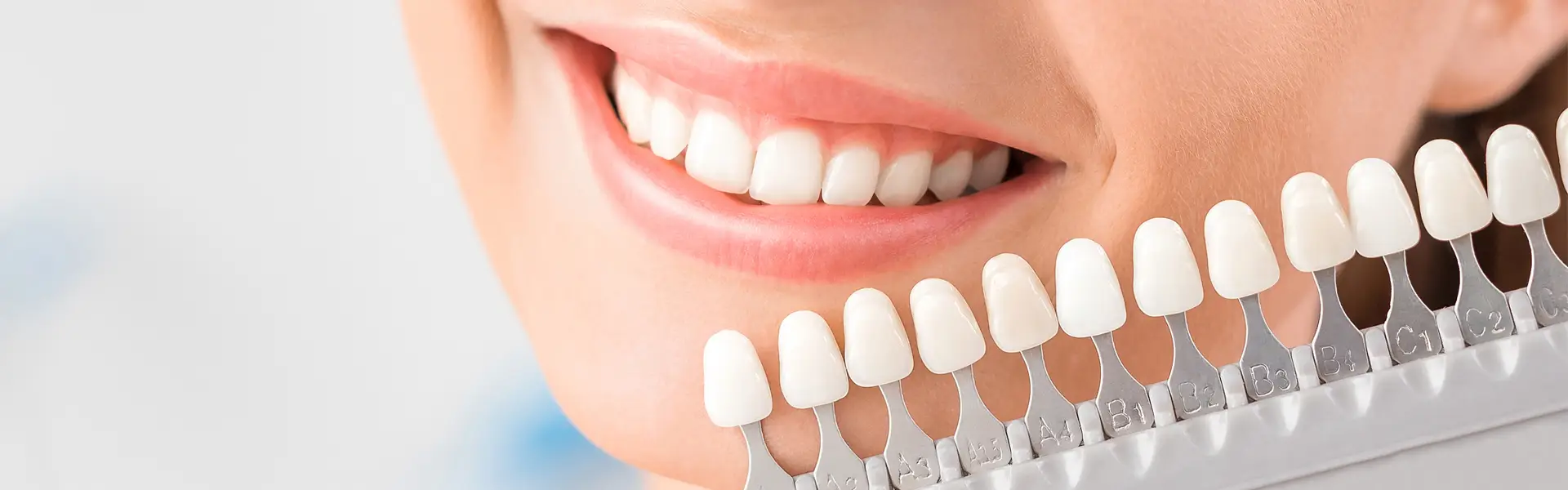
From Chips to Gaps: What Dental Issues Can Veneers Fix?
If you are considering dental veneers in Cambridge, ON, it is important to understand what this treatment can realistically improve. Veneers are thin restorations bonded to the front surface of teeth to refine shape, shade, and overall symmetry.
They are designed for cosmetic enhancement and are most effective when the underlying teeth and gums are healthy.
Before proceeding, a full clinical evaluation is necessary to confirm that no decay, gum inflammation, or bite instability is present.
Cosmetic improvements should never replace essential restorative or periodontal care. A thorough consultation ensures veneers are used appropriately and safely.
Cosmetic Concerns Veneers Can Address
Veneers are commonly chosen to improve visible imperfections that affect confidence. These may include minor chips, worn edges, small gaps, irregular contours, and deep staining that does not respond to whitening.
Because veneers rely on enamel for bonding, the natural tooth structure must be intact and stable. A consultation with a dentist in Cambridge helps determine whether veneers are appropriate or whether alternative treatments would better address structural concerns.
It is also important to evaluate bite forces and jaw alignment. If excessive grinding or clenching is present, protective measures may be recommended to reduce stress on the restorations.
Repairing Minor Chips and Surface Damage
Small chips and superficial cracks can make teeth appear uneven. Veneers can cover these areas and restore a smoother outline.
A minimal layer of enamel is usually reduced to ensure the restoration fits smoothly against the tooth surface.
A digital scan or impression is taken so the veneer can be customized to match adjacent teeth in size and color.
If the crack extends deeper into the tooth, additional treatment may be required before cosmetic correction. Functional integrity must be confirmed before placing any aesthetic restoration.
Reducing Small Gaps Without Braces
Minor spacing between teeth can sometimes be improved with veneers. By slightly increasing the visible width of each tooth, the space between them may appear smaller or fully closed.
This approach works best for limited spacing. Veneers do not reposition teeth within the jaw, so more significant alignment issues may require orthodontic care.
Accurate measurements are essential to maintain balanced proportions and avoid creating teeth that appear overly wide. A detailed evaluation at a dental clinic in Cambridge ensures the treatment plan supports both aesthetics and function.
Addressing Stains That Whitening Cannot Fix
Certain types of discoloration do not respond well to whitening procedures. These stains may result from trauma, medication exposure, or internal changes within the tooth structure.
Veneers can reduce the visibility of deep staining by covering the front surface with a carefully selected shade. Unlike bleaching, which lightens natural enamel, veneers allow for controlled color correction.
Many patients considering cosmetic veneers choose this option because it provides more consistent shade improvement when whitening alone is insufficient.
Improving Shape and Symmetry
Teeth that are uneven in size, slightly rotated, or irregular in contour can affect smile balance. Veneers can refine edges, adjust length, and create a more uniform appearance.
This option is most appropriate when enamel remains intact and bite forces are evenly distributed. If occlusal instability or significant tooth movement is required, orthodontic correction may be recommended instead.
A comprehensive evaluation helps determine whether reshaping the tooth’s front surface will achieve the desired improvement without compromising function.
Comparing Porcelain and Composite Options
There are two primary materials used for veneers: porcelain veneer and composite veneer
Porcelain restorations are fabricated in a laboratory and bonded during a separate visit. They are known for durability, stain resistance, and a translucent quality that closely resembles natural enamel.
During a single visit, the dentist applies and contours composite resin directly on the tooth.
They may require less enamel removal and allow for easier modifications if small adjustments are needed. However, they may be more prone to wear compared to porcelain under heavy chewing pressure.
The term teeth veneers is often used to describe either material. The appropriate choice depends on enamel thickness, bite stability, aesthetic goals, and long-term maintenance expectations.
At Floss Dental Clinic Cambridge, cosmetic treatment begins with a comprehensive assessment to confirm that veneers are suitable and that oral health is stable. Addressing underlying concerns before aesthetic changes helps support long-term tooth stability.